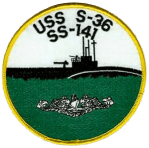
 The USS S-36 (SS-141) belonged to the S-class submarines, a fleet born in the aftermath of World War I. These boats, designed with postwar optimism, showcased the U.S. Navy’s growing ambition to dominate undersea warfare. At the time of their commissioning, they were marvels of engineering—fast, stealthy, and versatile. But by the 1940s, they had aged out of the Navy’s cutting edge. The advent of larger, more advanced submarines relegated these vessels to secondary roles. However, as the shadow of war darkened the Pacific, necessity demanded their return to the forefront.
The S-class submarines were dispatched to critical theaters, including the Philippines, where they became a vital part of the U.S. Asiatic Fleet. Tasked with patrolling vast, contested waters, these submarines and their crews braved obsolescence and mechanical challenges to deliver reconnaissance and engage the enemy. Among them, the USS S-36 played a brief but valiant role in the early days of World War II.
The USS S-36: From Commissioning to the Brink of War

Commissioned on April 4, 1923, and built by Bethlehem Shipbuilding Corporation in San Francisco, the USS S-36 began her career as a coastal defense submarine. For nearly two decades, she operated in the Pacific, alternating between winter deployments in the Philippines and summer exercises along the Chinese coast. As tensions with Japan mounted in the 1930s, the S-36’s mission shifted from routine drills to preparing for conflict. By 1940, her forays into Chinese waters ceased entirely, reflecting the region’s growing instability.
On December 2, 1941, six days before Pearl Harbor, the S-36’s scheduled overhaul was abruptly canceled. Lieutenant John R. McKnight, Jr., her commanding officer, was given verbal orders to prepare for a secret mission. The crew labored for hours to bring the aging vessel to readiness, loading torpedoes and testing systems under immense pressure. By 0100 on December 3, she was underway, her mission to intercept any Japanese forces targeting Luzon’s Lingayen Gulf.
Wartime Patrols and Challenges
The USS S-36’s first wartime patrol began on December 8, 1941, the day after the attack on Pearl Harbor. Positioned off Lingayen Gulf, she remained vigilant but faced constant mechanical difficulties. Leaking valves, steering failures, and a faltering radio plagued the submarine. Despite these setbacks, the crew’s resolve never wavered. On December 20, the submarine returned to Mariveles in Bataan for repairs. After replenishing supplies, she ventured back into the Philippine waters on December 30.
Her second patrol was marked by both daring and desperation. On January 1, 1942, the S-36 engaged a Japanese transport ship in Calapan Harbor, Mindoro, claiming a sinking—a success that lifted the crew’s spirits despite the lack of confirmation in Japanese records. But as the patrol continued, the submarine’s condition deteriorated. Compressors failed, engines overheated, and oil leaks turned routine maneuvers into perilous challenges. On January 15, while navigating the Sulu Sea, a Japanese destroyer detected the crippled submarine.
The enemy launched a volley of depth charges, battering the S-36’s hull and damaging critical systems. Lights shattered, the gyrocompass failed, and the crew prepared to surface and fight. Lieutenant McKnight’s leadership proved pivotal in these moments. Through sheer ingenuity and determination, the crew stabilized the submarine and evaded destruction, though her engines barely functioned.
The Loss of USS S-36
By January 20, the USS S-36 was en route to Surabaya, Java, to seek much-needed repairs. At 0404, she struck Taka Bakang Reef in the Makassar Strait. The collision was devastating. Seawater flooded the forward battery compartment, releasing chlorine gas. Lieutenant McKnight quickly assessed the situation and sent out a plain-language distress signal—a desperate move that risked enemy interception but was necessary to save his crew.
The USS Sargo received the call and relayed it to Surabaya headquarters. Meanwhile, McKnight and his crew fought to save their submarine. Men worked tirelessly to patch leaks and stabilize systems, even as the toxic gas made the air increasingly unbreathable. By morning, a Dutch vessel, the Attla, arrived to assist. Most of the crew, two officers and 28 sailors, evacuated to the Attla. McKnight and a small team stayed behind, holding on to the hope that the submarine might still be salvaged.
On January 21, the situation became untenable. The Dutch cargo ship Siberote arrived, and McKnight made the agonizing decision to abandon and scuttle the S-36. At 1330, the last man opened the submarine’s seacocks, and she was deliberately sunk. Remarkably, every crew member survived the ordeal, a testament to the leadership and camaraderie aboard the USS S-36.
Legacy of the USS S-36
The story of the USS S-36 is one of perseverance in the face of overwhelming odds. Although the submarine’s service was brief, her crew’s courage and determination left a lasting impression on the U.S. Navy’s Silent Service. Lieutenant McKnight’s decisive actions ensured that no lives were lost, and his leadership remains a shining example of naval command under pressure.
The S-36 earned one battle star for her wartime efforts, a modest recognition of the significant role she played during a desperate time. Her crew went on to serve aboard other vessels, carrying the lessons and spirit of the S-36 into new battles. The submarine’s story reminds us that even the most outdated tools can achieve greatness when wielded by skilled and dedicated hands.
For submarine veterans and naval historians, the USS S-36 represents the indomitable spirit of the early Pacific War. Her wreck rests silently on Taka Bakang Reef, a testament to the bravery of those who served aboard her. As one veteran remarked, “The S-36 may be gone, but she will never be forgotten.” Her legacy lives on in the traditions of the U.S. Submarine Service and in the hearts of those who honor the sacrifices of wartime sailors.
The story of the USS S-36’s service and loss is a powerful chapter in naval history. It serves as a reminder that heroism is not confined to technological superiority but thrives in the courage and resourcefulness of those who rise to meet extraordinary challenges.
 Patrol Reports
Leave a comment